Planning Protocol & Safety Procedures
Positive risk-taking can play a valuable role in the learning process. The type of risk-taking educators aim to nurture involves repeated exposure to positive, mitigated risks - which can lead to learner empowerment, trust in oneself and others, and increased self-esteem. To effectively support this, educators need to understand the differences between real and perceived risk, and understand how crucially important it is to adhere to OPHEA guidelines to provide safe program planning for all learners.
This preparedness includes assessing vendors and locations, having a sound emergency response plan, and a solid plan for experiential and adventurous learning outdoors.
Sample Vendor Assessment
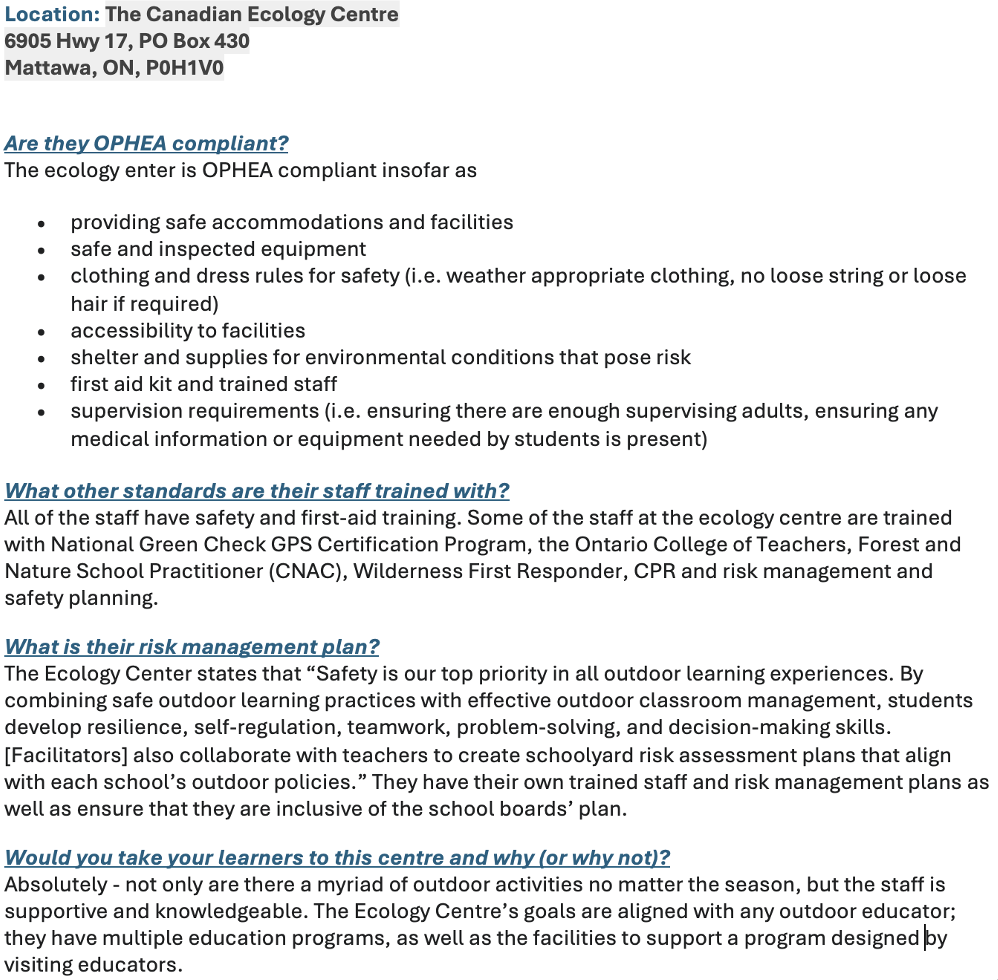
The Canadian Ecology Centre
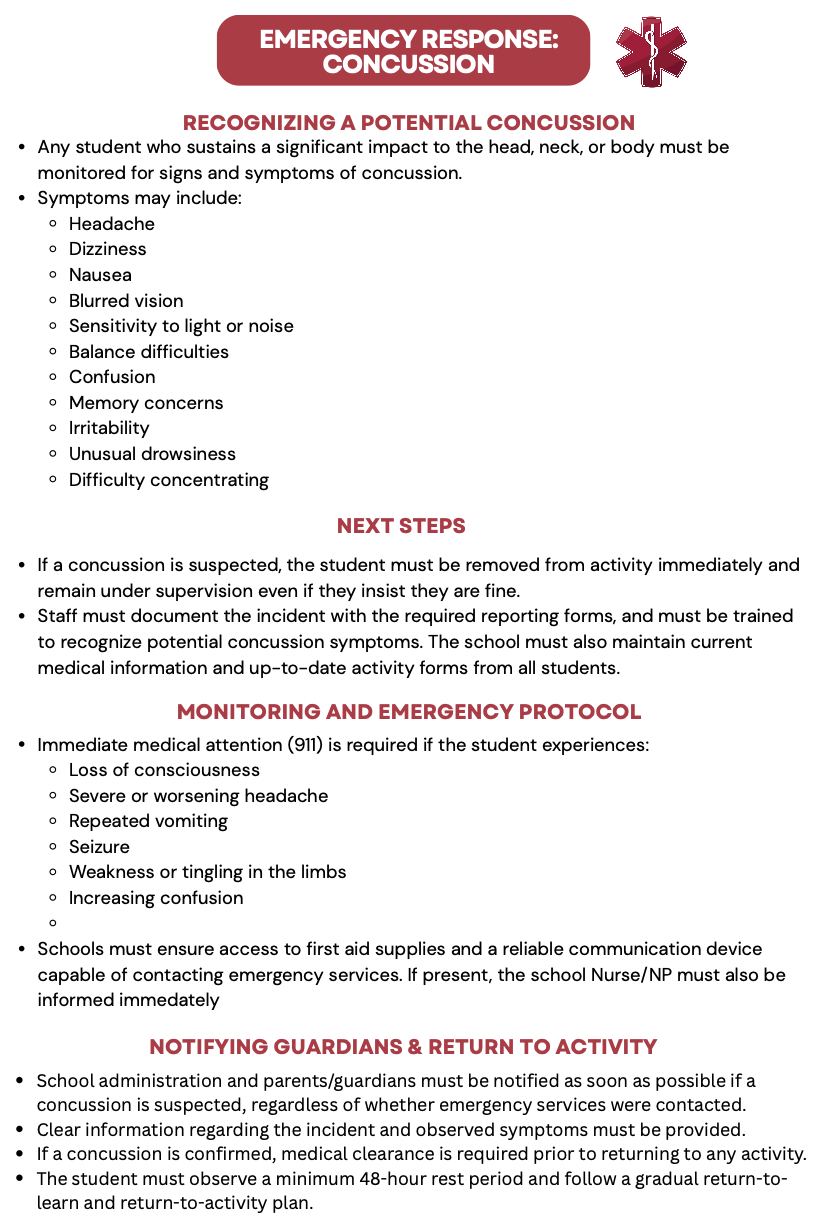
Sample Emergency Response Plan
Following the NNDS (and other boards) policy and Rowan’s Law, here is an Emergency Response Plan for potential concussion: