Assessment Strategies
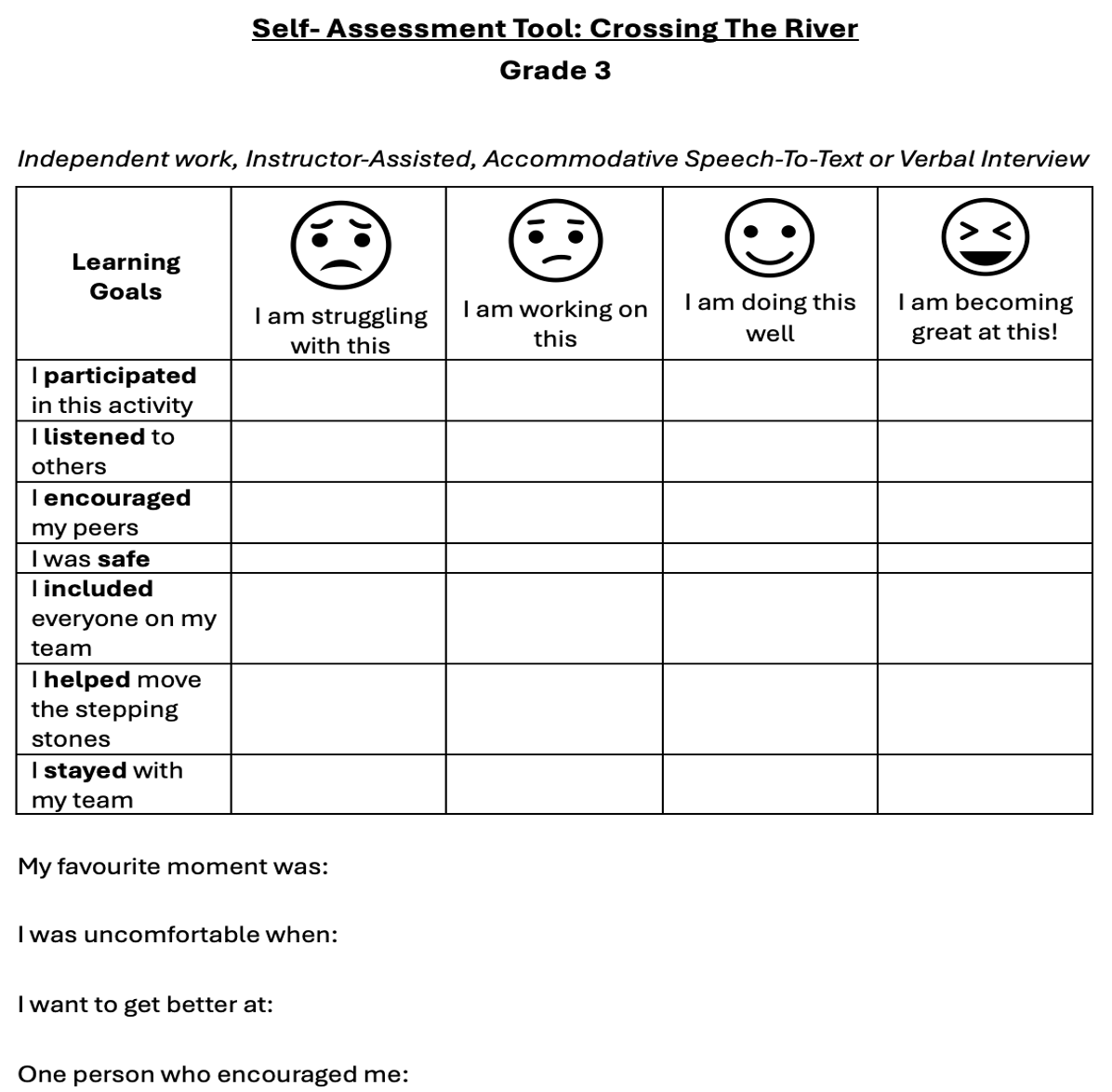
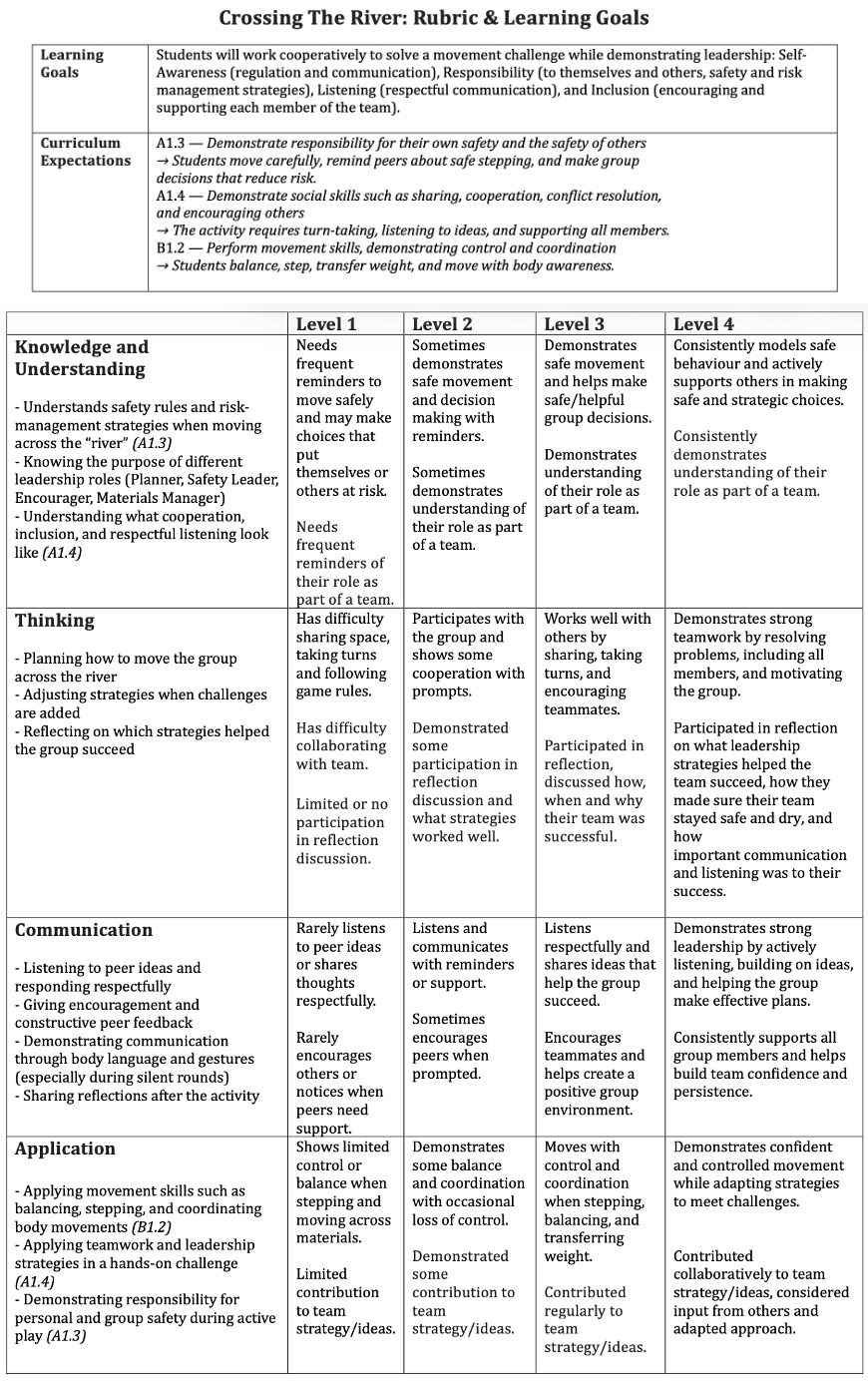
Various essential assessment strategies for outdoor education support both student learning and engagement. Debriefing is used to deepen learning and help transition or scaffold between activities by providing clear, concise instructions beforehand. This includes breaking tasks into manageable steps, and bringing closure afterward by encouraging students to reflect on how their experiences may impact the future or guide their next steps in learning. When used with intention, praise can play an important role in providing Constructive Feedback in the classroom. Praise models for students what positive interaction and collaboration look like, when working toward a shared learning goal. Thoughtful praise also allows all learners to feel seen and heard, which can contribute to a more inclusive and supportive learning environment - when students are recognized for specific efforts, it can help to build their self-esteem and accountability. Learner-led Evaluation highlights the importance of student voice, allowing learners to actively engage in their learning journey while providing valuable insight for educators. Triangulation of Data supports assessment by using various strategies related to observations, conversations, and products to gather ongoing evidence of learning without interrupting the experience. Summative Rubrics rely on an understanding of the four categories of assessment (KUTCA) with the recognition that level 4 achievements should be attainable for all learners.